Need Visa Information
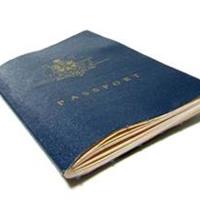
Need a visa for Australia
WHV's can ONLY be applied for; before arriving in Australia. Working Holiday Visa's* can only be granted before you arrive in Australia. For
details about applying visit Australia's official website here (www.immi.gov.au) or visit a Travel Agent or an Australian Embassy or Consulate
in the country you are in.
Need Superannuation Information
If your monthly wage is more than $A450, your employer must contribute an additional sum equal to 9.5% of your wage into a superannuation (pension) account for you. If you entered Australia on an eligible temporary resident visa you can, in most cases, access your contributions when you leave Australia, although the contributions will be taxed.
Backpackers Millstream NP
| Millstream-Chichester National Park |
Most of the 200,000 hectare Millstream-Chichester National Park is a landscape of rolling hills, spectacular escarpments and winding tree-lined watercourses. |
| The Chichester Range rises sharply from the coastal plain and includes rocky peaks, tranquil gorges, and hidden rock pools such as Python Pool. Scattered white-barked gums and spiky spinifex clumps cover the stony plateau, which gradually slopes down to the bed of the Fortescue River. |
| In the midst of this landscape is the remarkable oasis of Millstream, where fresh water springs from an aquifer to create the lushly tropical Chinderwarriner Pool. Paperbark and palm trees surround this deep pool on the Fortescue River. |
| The park's shady camping areas near deep pools at Crossing Pool and Deep Reach attract tourists and locals all year round, but winter is the best time to visit. The cool season between May and August, experiences little rain, with day time temperatures around 26º Celcius. |
| The area has an interesting cultural history. It has long been a focal point for the Yinjibarndi people and was an active pastoral station for more than 100 years. Previously two separate parks, the area was expanded into one park in 1982, and it has significant natural, recreational and cultural values. |
| The broad area of land straddling the Fortescue River, from the Hamersley Range through to the Chichester escarpment is the homeland of the Yinjibarndi people. Ngarrari (Millstream) was an important camp site for inter-tribal meetings. Visitors camped beside Chinderwarriner Pool, where they feasted on fresh fish and edible plant roots, harvested wood for spears and collected rocks for ritual purposes. Today the Yinjibarndi people maintain close ties with their land and have been trained and employed as rangers and contract workers. |
| Millstream was named in 1861 by the explorer F T Gregory, who reported its favourable grazing prospects. The pastoral lease, first taken up in 1865 changed hands several times before Les Gordon assumed management of the property in 1923. In its heyday the station covered more than 400,000 hectares and ran 55,000 sheep. The homestead which now houses the visitor centre, was built in 1919 and was home to the Gordon family until 1964. |
| Plants and Animals Plants flower after rain, when blankets of mulla-mulla and Sturt pea cover the landscape. The soft yellow flowers of the wattles and the orange cockroach bush provide a dramatic contrast to the hard red earth. Generally, the winter months, from June to August, are the best time to see the Pilbara wildflowers. |
| Plants more typical of the tropical north grow near permanent water pools. Of special interest is the Millstream palm, with its fanned, greyish-green leaves and smooth bark. Exotic date palms and cotton palms introduced by pioneers have now spread throughout the Millstream Delta. |
| The common kangaroo of the rocky country is the euro and on the plains you can see red kangaroos. Black flying foxes are easily seen at Millstream and a variety of birds can be seen during the cooler hours of the day, especially near water. Fourteen species of dragonfly and damselfly have been recorded in the Millstream wetlands. |
| The historic town of Roebourne and the ghost town of Cossack are amongst the oldest settlements in Western Australia |
|
|
|
|